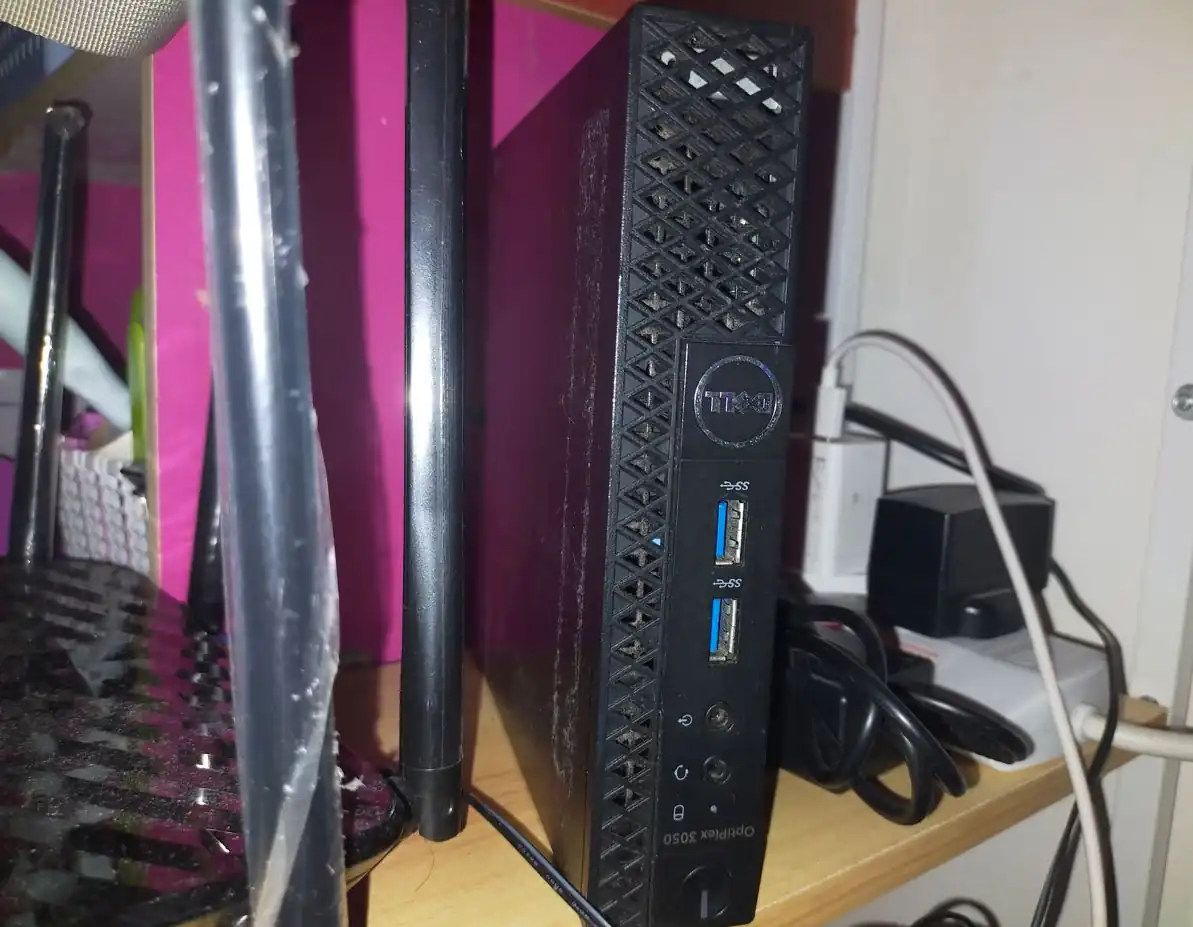
<?xml version="1.0" encoding="utf-8"?><feed xmlns="http://www.w3.org/2005/Atom" ><generator uri="https://jekyllrb.com/" version="4.4.1">Jekyll</generator><link href="https://paralltec.com/feed.xml" rel="self" type="application/atom+xml" /><link href="https://paralltec.com/" rel="alternate" type="text/html" /><updated>2026-05-18T18:23:02+08:00</updated><id>https://paralltec.com/feed.xml</id><title type="html">ParallTec</title><subtitle>Precision in Learning — Connecting the Future</subtitle><author><name>Hilary J</name></author><entry><title type="html">My Ongoing Projects And My Dell Optiplex 3050 Micro HomeLab. I Join AI Hackathon too!</title><link href="https://paralltec.com/ongoing-projects-dell-optiplex-3050-micro-homelab/" rel="alternate" type="text/html" title="My Ongoing Projects And My Dell Optiplex 3050 Micro HomeLab. I Join AI Hackathon too!" /><published>2026-04-20T21:58:45+08:00</published><updated>2026-04-20T21:58:45+08:00</updated><id>https://paralltec.com/ongoing-projects-dell-optiplex-3050-micro-homelab</id><content type="html" xml:base="https://paralltec.com/ongoing-projects-dell-optiplex-3050-micro-homelab/"><![CDATA[<p>My wife has been asking me what I actually want to do with the Dell Optiplex 3050 Micro SFF sitting on my desk.</p>

<p>Fair enough.</p>

<p>Aligned with my goal of transitioning my career into IT, I finally made up my mind to turn it into a Proxmox server. With an Intel i3-6100T CPU, 16GB DDR4 RAM, and 500GB SSD storage, I believe this little machine still has the necessary power to serve as my home lab.</p>

<p><img src="/assets/img/2026/04/dell_optiplex_3050_micro.webp" alt="Dell" /></p>

<p>I want my home lab to become more than just a hobby. It’s my “sandbox”, a place where things break, get rebuilt, and (sometimes) actually work. It’s where I can my hands dirty. I don’t want to apply for IT jobs and give them only my certificates as proof; I want them to see that I get my hands dirty in my free time.</p>

<p>It feels like there is always something to build or break, so I’m using this post to document the chaos and the progress. There is a lot of ideas and projects that I wanted to try and run, but let’s do it one at a time.</p>

<p>So here’s a rundown of everything I’ve been juggling these past few weeks.</p>

<h2 id="1-infrastructure--optimization">1. Infrastructure &amp; Optimization</h2>

<ul>
  <li>The Blog (<a href="/">paralltec.com</a> &amp; <a href="http://ubipanas.com">ubipanas.com</a>): I’ve always enjoyed writing, so I currently run two blogs. I want them to run efficiently alongside each other on the same VPS. I currently have two VPS servers, and I have been migrating both sites to test resource management, caching layers, and server hardening. It’s all about finding that balance between security and resource efficiency. I am currently in the middle of hardening the web server and deciding which VPS will house each site.</li>
  <li>Proxmox &amp; Pi-hole: This is the backbone of the lab. Proxmox manages the VMs/LXCs, while Pi-hole ensures the entire network is filtered and acts as the DNS server for my local network.</li>
</ul>

<h2 id="2-the-observability-stack-monitoring">2. The Observability Stack (Monitoring)</h2>

<p>My goal here is total visibility. If something in my network goes down, I want to know why immediately.</p>

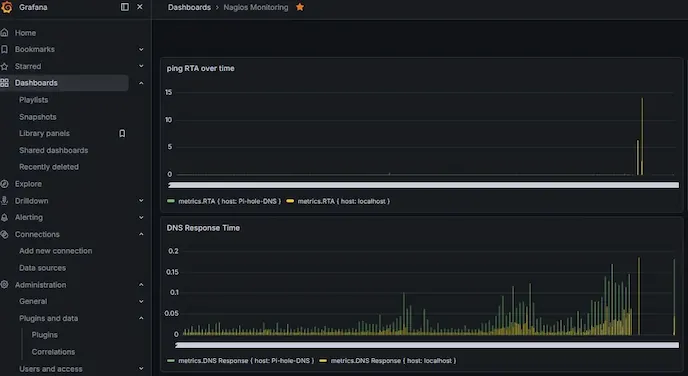
<p><img src="/assets/img/2026/04/grafana_dashboard.webp" alt="Grafana Dashboard" />
Nagios &amp; Zabbix: I’m running both to compare how they handle alerts and data collection. It’s been a great exercise in understanding different agent-based monitoring architectures. I am currently setting this up across all my servers, including the VPS.</p>

<ul>
  <li>Grafana: This is where it all comes together. Getting Nagios and Zabbix data to visualize in Grafana wasn’t just about “getting it working” it was about learning how to query APIs and handle data flows.</li>
</ul>

<h2 id="3-networking--connectivity">3. Networking &amp; Connectivity</h2>

<p>A lab is only as good as its ability to talk to the world (and to itself).</p>

<ul>
  <li>WireGuard &amp; Tailscale: I’m currently architecting a secure tunnel between my home lab and my cloud VPS. WireGuard is my focus for site-to-site connectivity, while I’m testing Tailscale to handle mobile/remote access.</li>
  <li>The Gateway Strategy: I will likely isolate WireGuard into its own dedicated VM for security purposes, creating a “choke point” for all incoming traffic to keep my network secure.</li>
</ul>

<h2 id="4-the-big-news-ai-hackathon">4. The Big News: AI Hackathon</h2>

<p>While managing the lab, I also dove headfirst into an AI Hackathon.</p>

<ul>
  <li>The project prototype concept aimed at protecting security engineers from the common fraud / scam up to social engineering. It’s one thing to run a server in a lab; it’s another to build a tool that solves a real-world cybersecurity problem. The project prototype front-end is hosted here: <a href="https://shieldai.paralltec.com/">https://shieldai.paralltec.com/</a></li>
</ul>

<h2 id="why-i-do-this">Why I Do This</h2>

<p>I don’t want to be the cert guy. I want to get my hand dirty. It’s also fun setting up all this while learning news thing.</p>

<p>I’m currently managing this all alongside my transition out of customer service. If you’re also building a home lab, I’d love to hear what stack you’re running. let’s connect in the comments.</p>]]></content><author><name>Hilary J.</name></author><category term="Project" /><category term="AI" /><category term="CareerTransition" /><category term="HomeLab" /><category term="Networking" /><category term="SysAdmin" /><summary type="html"><![CDATA[My wife has been asking me what I actually want to do with the Dell Optiplex 3050 Micro SFF sitting on my desk.]]></summary><media:thumbnail xmlns:media="http://search.yahoo.com/mrss/" url="https://paralltec.com/assets/img/2026/04/dell_optiplex_3050_micro.webp" /><media:content medium="image" url="https://paralltec.com/assets/img/2026/04/dell_optiplex_3050_micro.webp" xmlns:media="http://search.yahoo.com/mrss/" /></entry><entry><title type="html">5 Reasons Why I Choose an Unmanaged VPS Over Web Hosting Plans</title><link href="https://paralltec.com/5-reasons-choose-unmanaged-vps-vs-web-hosting-plans/" rel="alternate" type="text/html" title="5 Reasons Why I Choose an Unmanaged VPS Over Web Hosting Plans" /><published>2026-03-15T23:09:09+08:00</published><updated>2026-03-15T23:09:09+08:00</updated><id>https://paralltec.com/5-reasons-choose-unmanaged-vps-vs-web-hosting-plans</id><content type="html" xml:base="https://paralltec.com/5-reasons-choose-unmanaged-vps-vs-web-hosting-plans/"><![CDATA[<p><em>This post contains affiliate links. If you sign up through my link, I may earn a small commission at no extra cost to you.</em></p>

<p>Unmanaged VPS Over Web Hosting Plans, which one is suitable for your project?</p>

<p>Most people start a blog on a $5 shared web hosting plan. It’s easy, with a few clicks, your site is up and running in no time.</p>

<p><img src="/assets/img/2026/04/vps.webp" alt="Unmanaged VPS Over Web Hosting Plans, VPS VS Webhosting" /></p>

<p>One of consideration to make when we choose a hosting for our website or blog is what is our end goal. Do we want the site to be up and running in no time without the hands-on-work of setting up the server, the firewall, file structures and directories, installing software required to run a server. We just want the site to be up and start writing or do we want the hands-on-work of learning the nuance of running a server, maintaining it and installing required software.</p>

<h2 id="when-i-starting-out-the-wordpress-blog">When I Starting Out The WordPress Blog</h2>

<p>When I first started building <a href="/">ParallTec</a>, the obvious move was to grab a cheap shared hosting plan and call it a day. But my end goal is not just letting the site up and running and start writing. This is a technical blog and I wanted the hands-on-work of learning the nuance of running a server and maintaining it, like ParallTec, learning and doing in parallel.</p>

<p>When I was studying for my <a href="https://www.comptia.org/en-us/certifications/network">CompTIA Network+ certification</a>, there’s a section in Networking Concepts Domain where it introduced us to service models in cloud concepts, like SaaS, IaaS or PaaS.</p>

<p>A shared hosting plan is one example of PaaS or Platform as a service. They provide the platform and you do a minimal install, in my case, WordPress and plugin. I don’t have control or the hands-on-work of running a server, to administer the environment or the security.</p>

<p>An Unmanaged VPS on the other hand is a IaaS or Infrastructure as a service. It’s like having a computer in the cloud. I have complete control of the OS, the configuration and its security. I can get my hands dirty running it.</p>

<p>For my journey and my goal, IaasS, Infrastructure as a service is exactly what I needed.</p>

<p>I spent a few days researching VPS providers and since I’m located in Malaysia, I wanted something that is cheap, but can get the job done. One disadvantage in Malaysia is VPS providers tends to charge premium prices for their plan.</p>

<p>According to <a href="https://hostadvice.com/blog/web-hosting/vps/usa-europe-asia-vps-hosting-comparison"><em>hostadvice, USA vs Europe vs Asia - Affordable VPS Hosting by Region</em></a>, Asia VPS hosting typically comes at a higher cost due to infrastructure and routing complexity. Many Asian datacenters operate with higher power, real estate, and connectivity expenses, which are reflected in VPS pricing. There are also fewer large-scale providers and less aggressive competition also mean fewer ultra-cheap plans compared to the USA or Europe.</p>

<p>But I found one provider with affordable pricing that has datacenter in Singapore. It’s <a href="https://clients.webhorizon.net/?affid=209" target="_blank">WebHorizon</a></p>

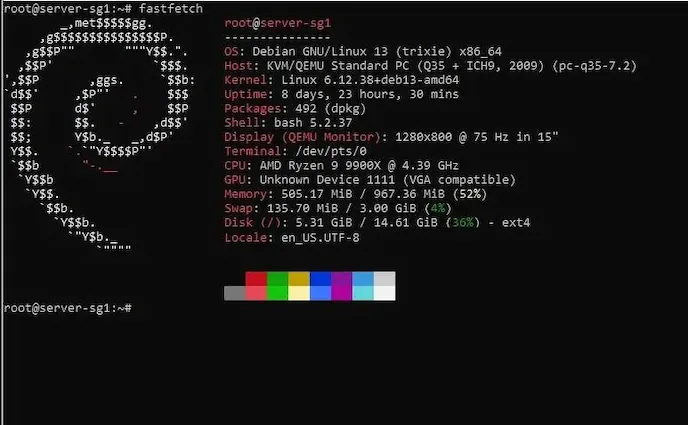
<p>They are offering 1GB DDR5 RAM and 1 Ryzen 9 vCPU. That is strong enough for starting a blog. As you can see, below is the spec of my VPS. I feel the speed is good, this blog does not feel slow at all.</p>

<p>Anyone interested can check their available offering through my affiliate link <a href="https://clients.webhorizon.net/?affid=209" target="_blank">here</a>.</p>

<p><img src="/assets/img/2026/03/Webhorizon_VPS_Ryzen9000.webp" alt="webhorizon VPS 1GBDDR5 1vCPU Ryzen 9000, Good VPS Spec for Wordpress" /></p>

<p>So I signed up with the WebHorizon VPS, I spun up an Unmanaged VPS running Debian 13, installed Nginx from scratch, configured PHP-FPM, tuned MariaDB by hand, and set up Cloudflare as a proxy — all from the command line with no control panel safety net.</p>

<p>Was it harder? Absolutely. Was it worth it? Without question. I learned a few things along the way.</p>

<p>If you are like me, wanted to start a website or a blog and can’t decide whether to go with Unmanaged VPS or a Webhosting, here are 5 factors worth weighing before you decide.</p>

<h2 id="1-dedicated-performance-no-noisy-neighbors"><strong>1. Dedicated Performance, No Noisy Neighbors</strong></h2>

<p>Is speed your main concern? Or is it not?</p>

<p>Shared hosting puts your site on a server alongside potentially many other accounts. When one of those sites gets a traffic spike or runs a resource-hungry script, everyone on that machine suffers. We call this the “noisy neighbor” problem.</p>

<p>Do you mind sharing resources with other users and a “little bit”of downtime is acceptable for your site / projects?</p>

<p>On my VPS, I have dedicated CPU and RAM allocated specifically to my workloads. My provider runs Ryzen 9 processors, so I’m getting consistent, modern compute power, not whatever leftover cycles shared hosts can spare. The result is predictable, reliable performance even during peak hours.</p>

<h2 id="2-enhanced-security--isolation-your-os-your-rules"><strong>2. Enhanced Security &amp; Isolation, Your OS, Your Rules</strong></h2>

<p>On a shared host, you’re running inside a shared environment. Even with good intentions from the provider, a compromised account on the same server can potentially expose yours through misconfigured file permissions or software vulnerabilities. Cross-site contamination is a documented risk.</p>

<p>A VPS gives you a fully isolated operating system. My files, processes, and network stack are completely separate from every other tenant on the physical host. I control the firewall rules, I decide what software runs, and I patch on my schedule. That’s IaaS, Infrastructure as a Service, in its purest form.</p>

<p>Running your own OS means you can harden it to your own standards: UFW rules, fail2ban, custom SSH configs, and nothing running that you didn’t install yourself.</p>

<h2 id="3-scalability-grow-without-starting-over"><strong>3. Scalability, Grow Without Starting Over</strong></h2>

<p>Shared hosting tiers are rigid. When you outgrow your plan, you’re usually looking at a painful migration to a new environment. A VPS is different, scaling is a conversation with your provider, not a full rebuild.</p>

<p>Right now I’m running on 1GB RAM with NVMe swap configured as a buffer. As ParallTec’s traffic grows, moving to 3GB or 4GB is a straightforward upgrade within the same environment. My Nginx config, my PHP-FPM pools, my MariaDB tuning, all of it carries forward. No downtime migration, no starting from zero.</p>

<p>Vertical scaling on a VPS is one of the cleanest ways to grow a small site. You pay for what you need, and more is always one ticket away.</p>

<h2 id="4-cost-efficiency-for-multiple-projects"><strong>4. Cost Efficiency for Multiple Projects</strong></h2>

<p>One of the most underrated advantages of a VPS is multi-tenancy, on your terms. Instead of paying for multiple separate shared hosting accounts for multiple separate projects, I can host all of them on a single VPS with Nginx virtual hosts.</p>

<p>Aside from <a href="/">ParallTec.com</a>, I have another project, <a href="http://ubipanas.com" target="_blank">ubipanas.com</a>. I’m planning to run both site alongside each other in 1 VPS. However, I’m yet to migrate due to the Webhosting plan contract is still running. I will consider moving into the same VPS when the Webhosting plan expired.</p>

<p>I have tested to migrate and run alongside each other, they are working perfectly fine. Both can live on the same server with isolated Nginx configs, separate log files, and independent PHP-FPM pools. Only needed some tuning but no big deal. With this setup, I will only be paying one monthly bill. One server to manage. Two live projects.</p>

<p>At scale, shared hosting’s “cheap” per-site pricing adds up fast. A single VPS at a slightly higher price point beats three or four shared accounts every time, especially when you factor in the performance and control advantages.</p>

<h2 id="5-full-control-the-real-career-factor"><strong>5. Full Control, The Real Career Factor</strong></h2>

<p>This is the most important reason, and the one I’d encourage anyone pivoting into IT to seriously consider. This is also the main reason I choose a VPS over a shared webhosting plan.</p>

<p>Managing a shared hosting account teaches you nothing. You click buttons in cPanel or plesk. You open tickets when things break. You learn none of the underlying systems that actually run the web.</p>

<p>So if your end goal is to learn, then VPS is the right choice.</p>

<p>Managing a VPS is a masterclass. I’ve configured Nginx server blocks, implemented FastCGI caching, tuned PHP-FPM’s ondemand process manager to minimize idle RAM usage, written Nginx regex rules to block dotfile access while preserving Certbot’s .well-known path, and set up Cloudflare R2 for external image storage. I’ll document each of these setups here as I go.</p>

<p>This is not just a blog. This is my portfolio. So I need full control so that I can learn, every configuration decision, every setup, I need to learn them to directly maps skills that I can transfer to my career pivot plan. With this site, I can learn Linux administration, web server management, security hardening, and performance optimization.</p>

<p>I passed CompTIA Network+ certification, now I want to learn more.</p>

<p>If you’re building a homelab or pursuing IT certifications, running an Unmanaged VPS is one of the highest-leverage learning investments you can make.</p>

<h2 id="final-thoughts"><strong>Final Thoughts</strong></h2>

<p>A managed web hosting plan is a perfectly reasonable choice if you want to publish a site without learning the infrastructure beneath it. But if you want to learn, grow, and build something you’re genuinely proud of, Unmanaged VPS is the path.</p>

<p>The steeper learning curve is the point. Every error log you parse, every Nginx 502 you debug, every MariaDB query you optimize, that’s real IT experience. And in a job market where employers want proof of hands-on skill, that experience is the difference. That’s the whole point of ParallTec.</p>]]></content><author><name>Hilary J.</name></author><category term="Project" /><summary type="html"><![CDATA[This post contains affiliate links. If you sign up through my link, I may earn a small commission at no extra cost to you.]]></summary><media:thumbnail xmlns:media="http://search.yahoo.com/mrss/" url="https://paralltec.com/assets/img/2026/03/Webhorizon_VPS_Ryzen9000.webp" /><media:content medium="image" url="https://paralltec.com/assets/img/2026/03/Webhorizon_VPS_Ryzen9000.webp" xmlns:media="http://search.yahoo.com/mrss/" /></entry><entry><title type="html">How ParallTec.com Came to Life — The Story Behind the Blog</title><link href="https://paralltec.com/how-paralltec-com-came-to-life/" rel="alternate" type="text/html" title="How ParallTec.com Came to Life — The Story Behind the Blog" /><published>2026-03-07T00:04:16+08:00</published><updated>2026-03-07T00:04:16+08:00</updated><id>https://paralltec.com/how-paralltec-com-came-to-life</id><content type="html" xml:base="https://paralltec.com/how-paralltec-com-came-to-life/"><![CDATA[<p>I have always loved writing. Over the past 15 years, I have started and stopped more blogs than I care to admit. Life gets busy, motivation fades, and the blog quietly disappears. Sound familiar?</p>

<p><img src="/assets/img/2026/03/krabi_thailand.webp" alt="Krabi" /></p>

<p>A few days ago, something different happened.</p>

<p>I found myself asking Gemini AI a simple question. How can I make some extra money on the side without leaving my day job? Gemini threw out several ideas, and one of them caught my attention immediately. One of the suggestion was affiliate marketing through a blog.</p>

<p>I always wanted to pivot my career into something else.</p>

<p>You see, I currently work in customer service. It pays the bills, but my heart has always been pulled towards IT. I have been quietly working on that pivot, studying, building, breaking things, fixing them, and learning from every step. A few weeks ago I officially passed my CompTIA Network+ certification. A proud moment, but one that felt like the beginning rather than the end.</p>

<p>After my certification, I asked around these question. I asked on Reddit Forum, I asked people around me. I asked Gemini AI too, because, well AI is everywhere now right?</p>

<p><em>“How can I move into IT career without experience?”</em></p>

<p>The answer I’m getting changed everything.</p>

<p><em>“Through home lab and document everything you have done so they can see you are not only the exam guy or the certificate guy but you can also do it, hands on”</em></p>

<p>That answer hit differently, and everything clicked.</p>

<p>Why not build a space that documents everything I know, everything I am learning, and everything I am building? A place that is honest, practical, and useful to people who are on the same journey. And at the same time, I can show recruiter or hiring manager that I can actually build things.</p>

<p>That is exactly what <a href="/">ParallTec </a>is.</p>

<p>Here you will find my real world homelab builds, my self hosting guides, networking breakdowns, Microsoft certification notes, gadget reviews, and IT news and trends that actually matters. No fluff, no expensive gear requirements, just real tech, real experience, and real talk.</p>

<p>The name ParallTec comes from the idea of running things in parallel. A parallel universe, a parallel technology, paralltec, like my life right now. A day job running alongside a career pivot. A blog running alongside a homelab. Learning and doing.</p>

<p>Everything in parallel. Everything moving forward.</p>

<p>Welcome to <a href="/">ParallTec</a>. I am glad you found this place, and I hope it helps you as much as building it is helping me.</p>]]></content><author><name>Hilary J.</name></author><category term="Project" /><summary type="html"><![CDATA[I have always loved writing. Over the past 15 years, I have started and stopped more blogs than I care to admit. Life gets busy, motivation fades, and the blog quietly disappears. Sound familiar?]]></summary><media:thumbnail xmlns:media="http://search.yahoo.com/mrss/" url="https://paralltec.com/assets/img/2026/03/krabi_thailand.webp" /><media:content medium="image" url="https://paralltec.com/assets/img/2026/03/krabi_thailand.webp" xmlns:media="http://search.yahoo.com/mrss/" /></entry></feed>